
The aroma of sizzling garlic and ginger fills the air as I rush through my kitchen, eager to whip up a meal that transports me to lively street markets in Asia. This Simple Asian Fish with Ginger and Soy recipe is my go-to for those chaotic weeknights when time is scarce but a delicious dinner is a must. Whether you opt for tender tilapia or any other white fish, this dish guarantees quick preparation that doesn’t skimp on taste. Packed with umami flavors and bright garnishes, it’s not just a supper- it’s a savory escape! Plus, with minimal effort, you can create a low-fat meal that impresses everyone at the table. Ready to dive in and explore this culinary adventure?
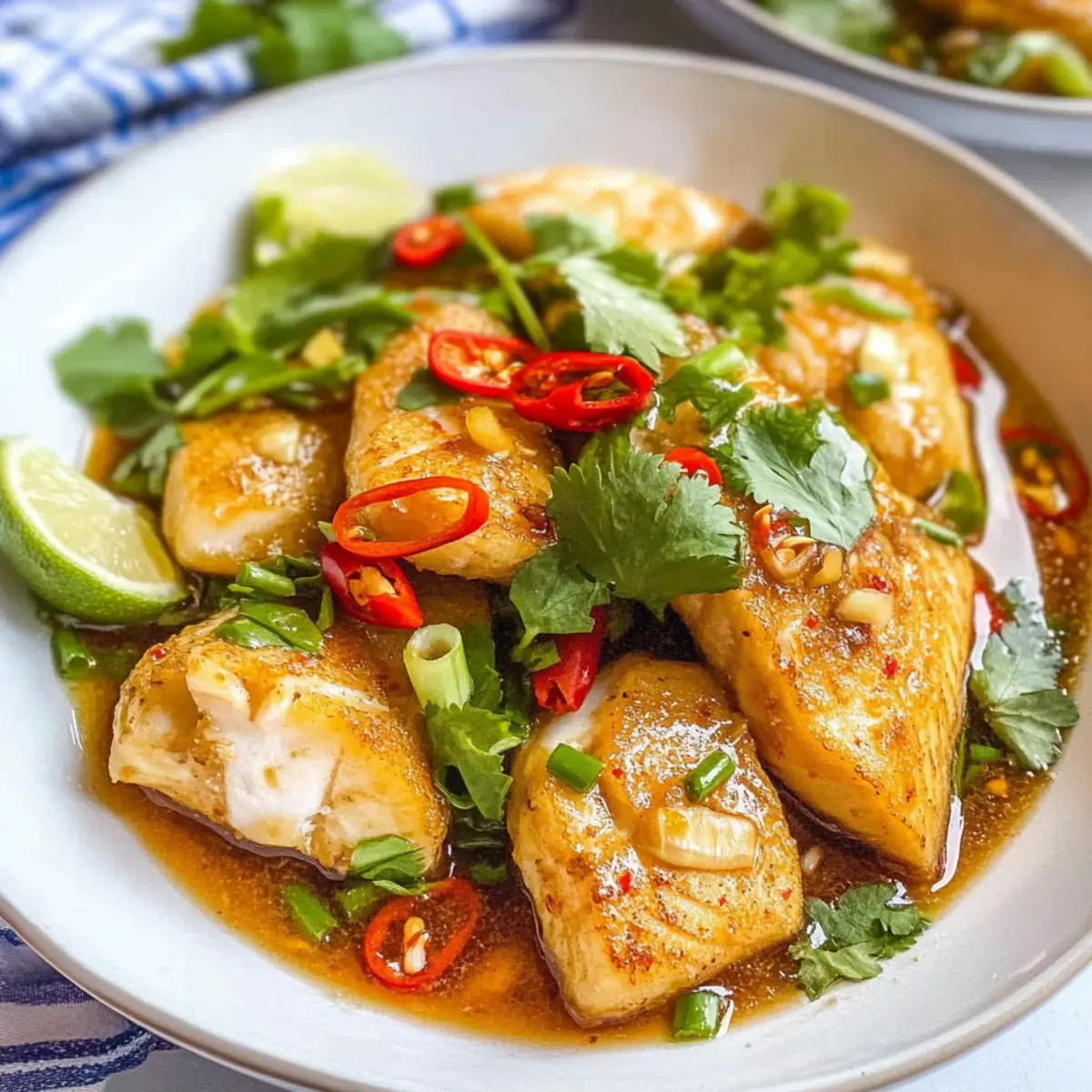
Why is this Asian fish recipe a must-try?
Quick Preparation: In just under 30 minutes, you can whip up a sumptuous meal that feels like a culinary getaway.
Versatile Ingredients: Feel free to substitute tilapia with your favorite white fish, making it perfect for whatever you have on hand.
Flavor Explosion: The combination of ginger, garlic, and sesame oil creates a rich, umami-packed sauce that elevates the dish.
Healthy Choice: Low in fat yet high on flavor, this recipe delivers a guilt-free indulgence—better than any fast food option!
Aromatic Experience: From the sizzling of garlic to the glossy finish of the sauce, cooking this fish is a feast for the senses.
Pair this dish with a refreshing Salad Bacon Cheese or a side of simple rice to complement the bold flavors.
Asian Fish with Ginger and Soy Ingredients
• Here’s everything you need to create your stunning Asian Fish with Ginger and Soy in no time!
For the Fish
• Tilapia (or any mild white fish fillets) – The star of the dish, providing a tender protein base; can be substituted with cod, basa, or catfish for similar results.
• Salt – Enhances the flavors of the fish before cooking.
• White Pepper – Adds a subtle and aromatic heat that complements the dish.
• Cornstarch – Gives a light dusting to help crisp the fish slightly while cooking.
For the Sauce
• Neutral Oil (e.g., canola, peanut) – Ideal for cooking the fish without overwhelming other flavors.
• Light Soy Sauce – Forms the base for the sauce, adding essential saltiness and umami notes.
• Fresh Ginger – Infuses the dish with fragrant warmth; grate or julienne for maximum flavor.
• Water – Adjusts the sauce for the right consistency to coat the fish perfectly.
• Sesame Oil – Provides a nutty flavor that’s essential to this dish.
• Rice Wine Vinegar – Adds a touch of acidity to balance the richness of the fish and sauce.
• Sugar – Balances the savory notes in the sauce for a harmonious flavor.
• Chili Crisp – Offers spice and depth; adjust according to your heat preference.
For the Garnishes
• Green Onions (Scallions) – Freshly sliced for a crunchy touch and mild onion flavor.
• Fresh Cilantro – Adds brightness and enhances the overall freshness of the dish.
• Red Chili (Fresno or Anaheim) – For a pop of heat and vibrant color; substitute with a milder chili if preferred.
• Lime Wedges – A squeeze over the fish brings brightness and acidity, elevating the dish further.
Dive into your culinary adventure and enjoy the delightful flavors of this simple Asian Fish with Ginger and Soy!
Step‑by‑Step Instructions for Asian Fish with Ginger and Soy
Step 1: Prepare the Toppings
Start by julienning fresh ginger and slicing the green onions, ensuring the textures are ready for garnish. Next, cut the red chili into thin rings for added flavor and color. Finally, wedge the lime for serving, ready to add brightness to your finished Asian Fish with Ginger and Soy dish.
Step 2: Season the Fish
Take your tilapia fillets or preferred white fish and lightly dust them with a mixture of salt, white pepper, and cornstarch. This coating will enhance the flavors and help create a slight crispiness during cooking. Set the seasoned fish aside while you prepare the sauce, ensuring it’s ready to cook.
Step 3: Make the Sauce
In a mixing bowl, whisk together the freshly grated ginger, light soy sauce, water, sesame oil, rice wine vinegar, sugar, and chili crisp. Stir until combined, ensuring the sugar dissolves completely. This sauce is integral to the Asian Fish with Ginger and Soy, bringing a delightful balance of flavors to your dish.
Step 4: Heat the Skillet
Heat a generous drizzle of neutral oil in a skillet over medium-high heat until shimmering. Ensure the oil is hot enough to avoid steaming the fish. Carefully add the fish fillets in a single layer; allow them to cook for about 3 minutes without moving, until they are lightly golden and just starting to cook through.
Step 5: Flip the Fish and Add Sauce
Using a spatula, gently flip the fish fillets over and pour the prepared sauce over them. Lower the heat slightly to a gentle simmer and cover the skillet. Allow the fish to cook for an additional 3 to 4 minutes until the fish flakes easily with a fork and reaches an internal temperature of 145℉.
Step 6: Garnish and Serve
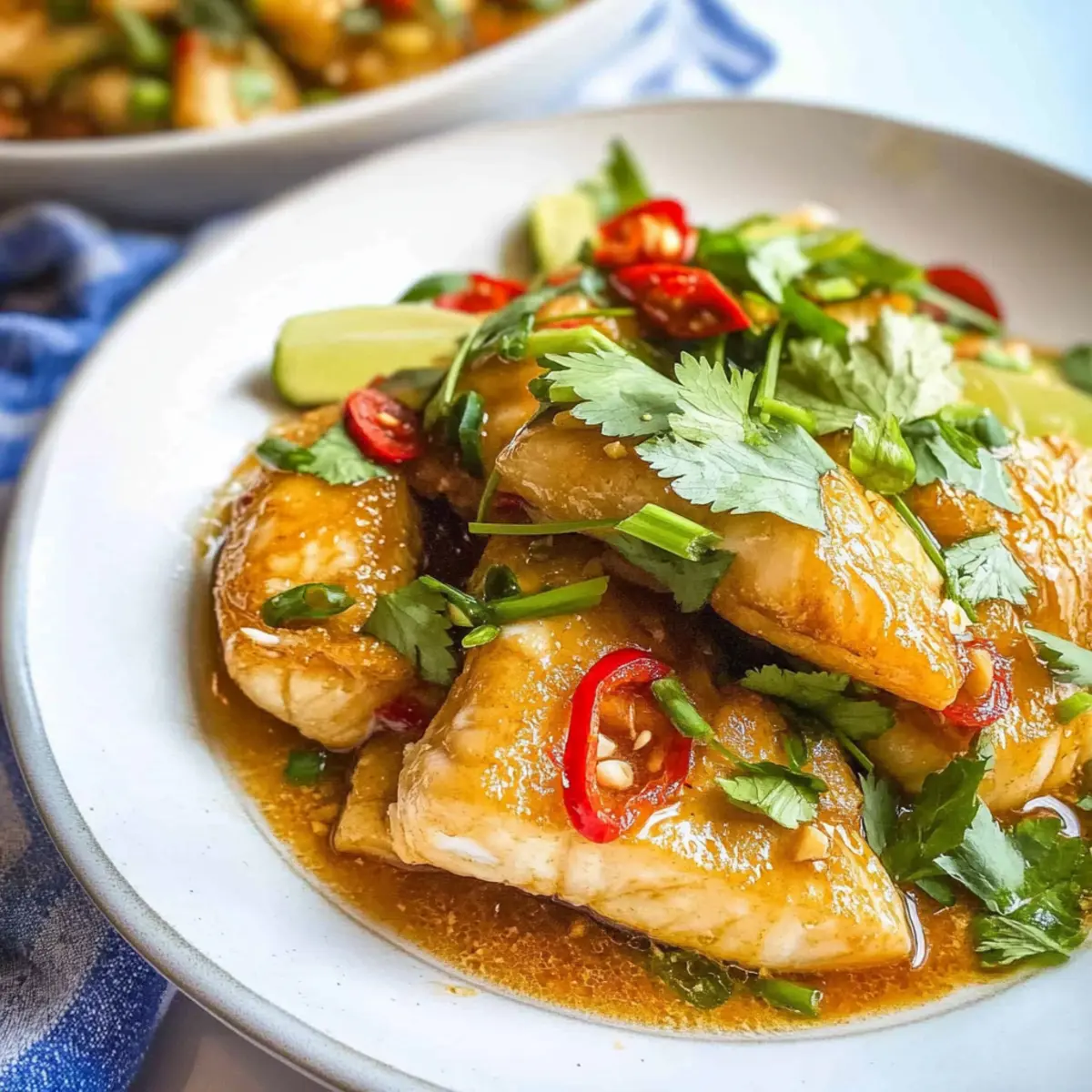
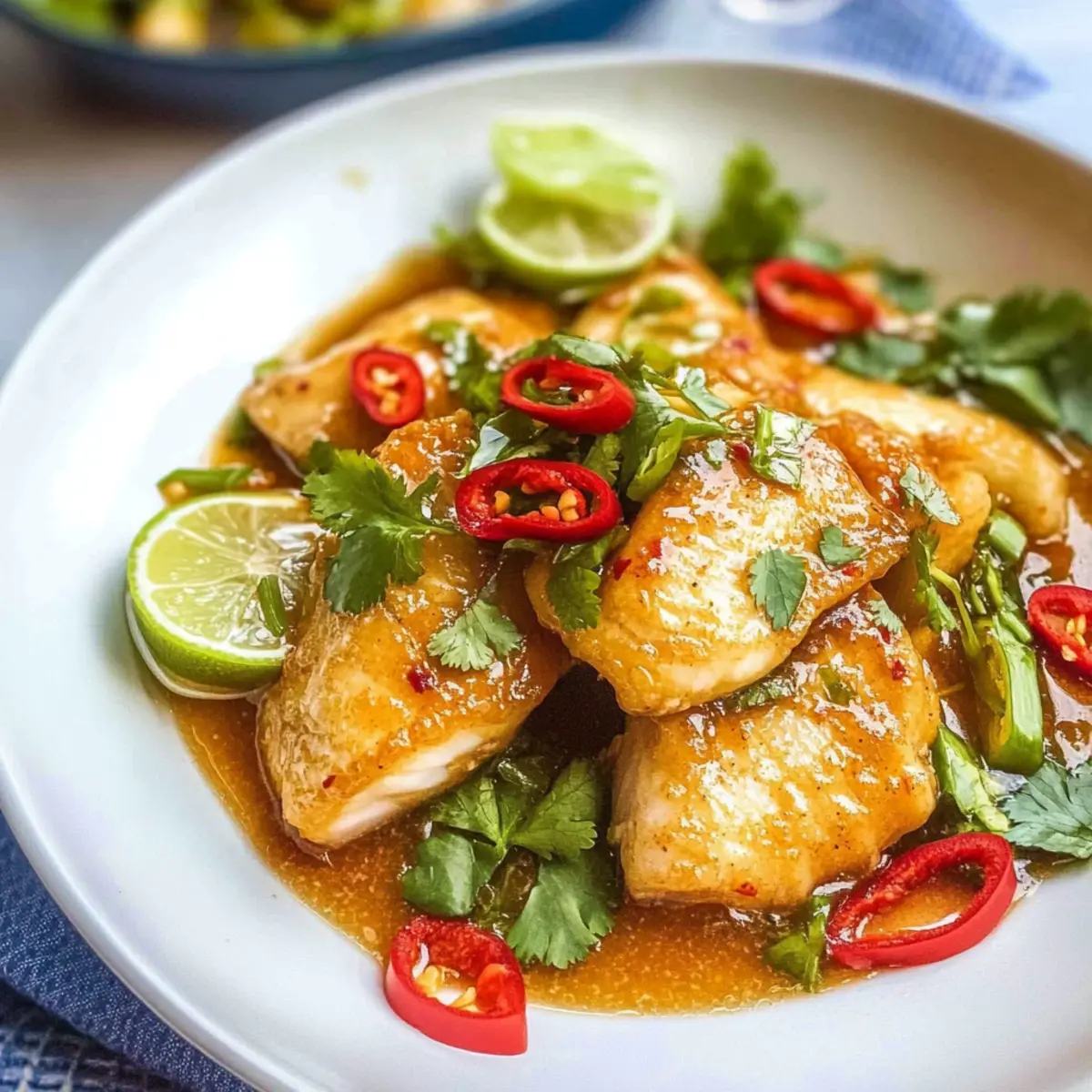
Once fully cooked, remove the skillet from heat. Carefully transfer the fish to a serving platter and generously top with the sliced green onions, fresh cilantro, and red chili rings. Serve hot with lime wedges alongside your vibrant Asian Fish with Ginger and Soy, adding zest to every bite.
Make Ahead Options
These Simple Asian Fish with Ginger and Soy are perfect for busy weeknights when you need to save time without compromising on flavor! You can prepare the sauce (ginger, soy sauce, sesame oil, vinegar, sugar, and chili crisp) up to 3 days in advance—just store it in an airtight container in the refrigerator. Additionally, you can season the fish fillets with salt, white pepper, and cornstarch up to 24 hours ahead, keeping them covered in the fridge to maintain freshness. When you’re ready to serve, simply heat your skillet, cook the fish for about 3 minutes per side, add the sauce, and simmer until perfectly flaky. This way, you’ll have a delicious meal ready to impress in no time!
Variations & Substitutions for Asian Fish with Ginger and Soy
Feel free to play with flavors and ingredients to make this dish your own!
- Dairy-Free: Use coconut aminos instead of soy sauce for a soy-free, dairy-free option with a slightly sweeter profile.
- Whole Grains: Swap white rice with quinoa or brown rice for a heartier, nutty base that complements the fish beautifully.
- Spice it Up: Incorporate fresh jalapeños along with or instead of chili crisp for an exciting kick and vibrant colors.
- Zesty Citrus: Add orange juice or zest to the sauce for a refreshing citrus twist that brightens the flavors even further.
- Veggie Boost: Toss in bok choy, snap peas, or bell peppers during the last few minutes of cooking for added color, crunch, and nutrition.
- Asian Flavors: Try using tamari for a gluten-free soy sauce alternative while maintaining the recipe’s umami essence.
- Add Sweetness: For a touch of sweetness, consider adding a teaspoon of honey or maple syrup to the sauce for depth and a lovely glaze.
- Herbaceous Touch: Enhance with fresh basil or mint in place of cilantro for a different herbaceous profile that lifts the dish to new heights.
Experimenting with these variations can elevate your simple meal into an unforgettable culinary experience. Serve alongside a delightful Carrot Cucumber Salad or a refreshing Avocado Bowls Mango to complete your dining adventure!
Storage Tips for Asian Fish with Ginger and Soy
Fridge: Store leftover Asian fish in an airtight container for up to 2 days; keeping it in the sauce preserves moisture and flavor.
Freezer: If you have extra cooked fish, freeze it in an airtight container for up to 1 month. Thaw in the refrigerator overnight before reheating.
Reheating: Gently reheat fish on the stovetop over low heat with a splash of additional sauce to avoid drying out, ensuring it remains tender.
Room Temperature: Avoid leaving cooked fish out for more than 2 hours to ensure food safety; always refrigerate leftovers promptly.
Expert Tips for Asian Fish with Ginger and Soy
-
Fish Selection: Choose mild white fish like tilapia or cod for the best results. Be sure it’s fresh or fully thawed for optimal flavor and texture.
-
Seasoning Matters: Don’t skip seasoning the fish with salt and white pepper before cooking; it’s essential to enhance the overall flavor of the dish.
-
Don’t Overcrowd: Cook fish fillets without crowding the skillet to maintain searing temperature for a slight crispiness.
-
Sauce Balance: Taste the sauce before adding to the fish; adjust sugar or vinegar to balance sweetness and acidity according to your preference.
-
Garnish Generously: Fresh herbs and spicy garnish like chilies not only enhance flavors but also add a vibrant visual appeal to your Asian Fish with Ginger and Soy.
-
Storage Tips: Store any leftovers in their sauce for added flavor. Reheat gently to maintain the fish’s tender texture.
What to Serve with Simple Asian Fish with Ginger and Soy
Elevate your mealtime experience with vibrant sides that complement the tantalizing flavors of your fish dish.
-
White Rice: A classic staple that soaks up the delicious sauce, providing a perfect canvas for your flavorful fish.
-
Cucumber Salad: Refreshing and crunchy, this salad balances the rich umami notes with its coolness and acidity.
-
Steamed Broccoli: Tender yet crisp, the subtle flavor of broccoli and its vibrant green color add a nutritious touch to your plate.
-
Egg Fried Rice: A savory, hearty option that harmonizes well with the fish, turning your meal into a satisfying feast.
Indulge in a well-rounded dinner by serving a chilled sake or green tea alongside. Both drinks elevate the meal while offering a refreshing finish.
Asian Fish with Ginger and Soy Recipe FAQs
What type of fish is best for this recipe?
Absolutely! Tilapia is a great choice due to its mild flavor and tender texture. However, you can easily substitute it with other white fish like cod, basa, or catfish to suit your preference. Just ensure they are fresh or properly thawed for optimal results!
How should I store leftover Asian Fish with Ginger and Soy?
Store any leftover fish in an airtight container in the refrigerator for up to 2 days. Keeping the fish in its sauce helps preserve moisture and enhances the flavor upon reheating.
Can I freeze the cooked fish?
Yes, you can freeze any extra cooked fish! Place the fish in an airtight container and it will stay fresh for up to 1 month. When you’re ready to enjoy it, thaw it overnight in the refrigerator. Reheat gently on the stovetop over low heat, adding a splash of sauce to keep it moist.
What should I do if my fish is overcooked?
If your fish turns out overcooked, there are options to salvage it! Consider flaking the fish and mixing it into a quick fried rice dish or tossing it in a salad. You could also add a bit of lemon juice or extra sauce to add moisture and flavor back in.
Are there any dietary considerations I should be aware of?
Yes, definitely! This recipe contains soy sauce, which has gluten. For those with gluten sensitivities, opt for gluten-free soy sauce or tamari. Additionally, ensure that any garnishes like chili crisp do not contain allergens if serving to others. Always check labels to be safe!
How can I tell if my fish is fully cooked?
To ensure your fish is perfectly cooked, look for an internal temperature of 145℉. The fillets should flake easily with a fork, signifying they are tender and done to perfection. If you’re unsure, a meat thermometer is a great tool to have on hand!
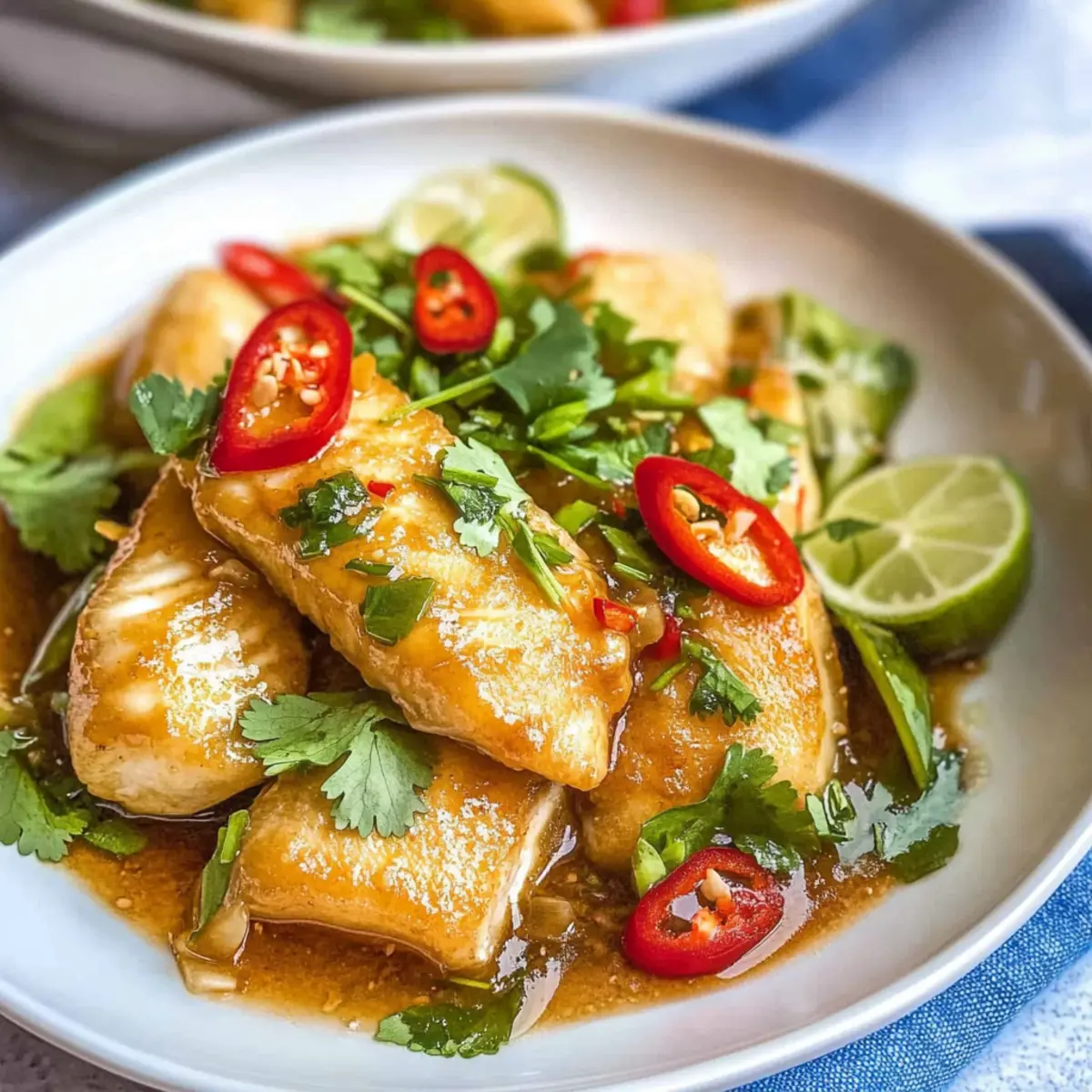
Savory Asian Fish with Ginger and Soy for a Quick Dinner
Ingredients
Equipment
Method
- Julienne fresh ginger and slice the green onions. Cut the red chili into thin rings. Wedge the lime for serving.
- Dust tilapia fillets with salt, white pepper, and cornstarch. Set aside while preparing the sauce.
- In a mixing bowl, whisk together ginger, soy sauce, water, sesame oil, rice wine vinegar, sugar, and chili crisp until combined.
- Heat neutral oil in a skillet over medium-high heat. Add fish fillets and cook for about 3 minutes until lightly golden.
- Flip the fish and pour the sauce over it. Simmer for 3 to 4 minutes until the fish flakes easily.
- Transfer fish to a platter and top with green onions, cilantro, and red chili rings. Serve with lime wedges.